When sourcing body scrubs from China, what export documents and compliance materials do buyers actually need to confirm with suppliers?
For cross-border procurement, a quotation is only the starting point. What really determines whether a batch of body scrubs can clear customs and be listed for sale is often whether the accompanying documents and compliance materials are complete. Prices can be negotiated and packaging can be changed, but if ingredients, labels, or export documents are deemed non-compliant in the destination country, the goods may be detained or returned.
Therefore, confirmation of documents and compliance materials should happen before the quotation, not after the order is placed.
When sourcing body scrubs from China, the materials buyers need to confirm with suppliers generally fall into four categories:
- Ingredient and formula documents: ingredient list, formula description, model, capacity, scent, target user group, and directions for use.
- Label and Packaging Information: Language required by the destination country, ingredient labeling method, net content, manufacturer/importer information, batch number and shelf life format.
- Test Reports: Safety data sheets related to body care products (if applicable) and testing items required by the destination country.
- Target Market Compliance Documents: Different markets may have different regulatory classifications for "body scrub," which need to be confirmed one by one according to the destination country.
Why the completeness of documents and compliance materials determines whether a project can proceed earlier than the quotation
Quotations can be negotiated repeatedly, but missing compliance materials will lead to goods being detained, returned, or even unable to be listed. Buyers should first clarify the target market (the rules in the United States, Canada, Europe, and Australia are not the same), and then have the supplier confirm item by item according to the market which materials are already available and which need to be supplemented. If this step is not done, subsequent discussions on price and lead time are meaningless.
Taking SELUNIVA BS-2 Watermelon Scrub as an example: what an actionable document confirmation checklist looks like
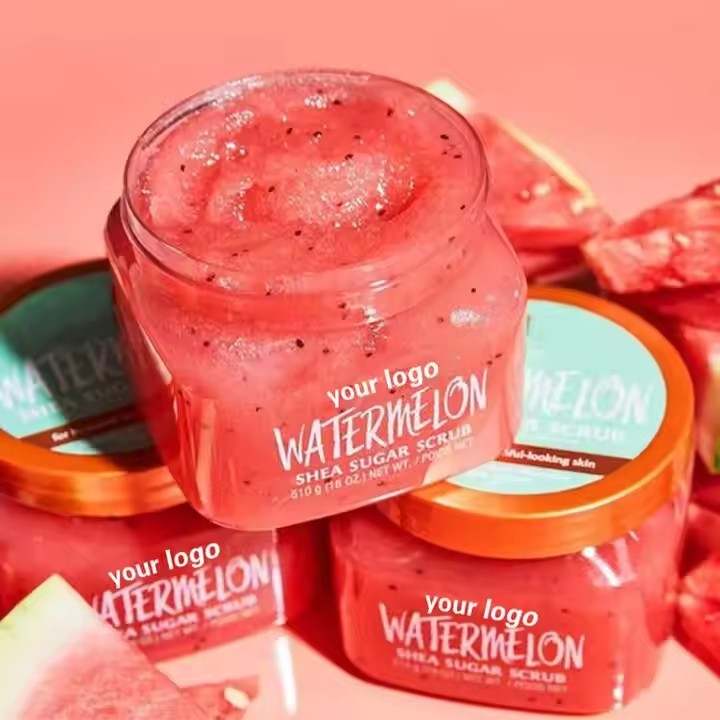
Using SELUNIVA BS-2 Watermelon Exfoliating Body Scrub (510g large jar, watermelon fruit scent, Shaanxi origin) as a reference, buyers can confirm with the supplier item by item: whether the ingredient list and formula description can be provided, whether the label complies with the destination country's language and labeling requirements, whether the test reports cover the target market requirements, and whether the export and trade documents are complete. It should be noted that this article does not fabricate certifications that SELUNIVA has obtained; all certification-related information is subject to the materials actually provided by the supplier. The 510g large jar label has relatively sufficient space, but the ingredient and function statements still need to be checked against the destination country's requirements, and it cannot be assumed that the existing materials can be used universally as they are.
The following sections will expand item by item according to the above four categories, giving the specific content to be confirmed and the order of judgment for each category.
Ingredient list and formula documents: when Ingredients is labeled as Other, what should buyers ask further?
In the product information, the Ingredients column is marked as Other. For buyers preparing to export to the United States, Canada, Europe, or Australia, this means that ingredient information usable for label creation and compliance declaration is currently unavailable, and they need to proactively follow up with the supplier.
What problems do the ingredient list, INCI names, and formula documents each solve?
These three types of materials serve different purposes and cannot substitute for one another:
- Ingredient list: aimed at consumers and regulatory labels, it usually needs to list all ingredients in descending order by content, and is the basic input for label creation.
- INCI names: the International Nomenclature of Cosmetic Ingredients, it is the common language for labels and filings in markets such as Europe, the United States, and Australia.Without INCI, it is difficult to directly convert the formula file into a label usable in the target market.
- Formula file: A description of the ingredient composition provided by the supplier, used to verify the ingredient list and determine whether additional testing or declarations are required.
With only an ingredient list and no INCI, the label may not be directly usable;With only a formula file and no formal ingredient list, consumer-facing information is still missing.
Which details of the ingredient information for the SELUNIVA BS-2 watermelon scrub need to be confirmed with the supplier?
For this product (model BS-2, 510g), it is recommended to ask at least about the following:
- Complete ingredient list: English ingredient list in descending order by content, along with the corresponding INCI names.
- The specific meaning of Other: Is it not yet organized, involves a confidential formula, or is it a page placeholder?Different reasons correspond to different follow-up actions.
- Target market label adaptation: The United States, Canada, Europe, and Australia have different requirements for ingredient labeling and allergen warnings. Can the supplier provide ingredient information that conforms to the target market's format?
- Consistency with claims: The Function in the product information includes exfoliates and deep cleanses. Whether the ingredient information can support the exfoliation and deep cleansing claims needs to be reviewed in light of target market regulations. This article does not provide specific legal advice.
- Document format: Can you issue a formal ingredient list or formula declaration document, rather than just a verbal explanation.
If the supplier cannot provide complete ingredient information, it is difficult for the buyer to determine whether the product fits the target market, and they also cannot complete label production. It is recommended to first complete the ingredient documentation, then proceed with packaging design and compliance filing.
Label and packaging information: When exporting 510g large-jar scrub, which fields must be confirmed on the label?
The label area of a 510g large jar is more generous than the conventional 200–300g specification, but the mandatory fields differ depending on the destination country for export. The following fields are recommended to be confirmed item by item before sampling.
Label field checklist: product name, net content, ingredients, usage instructions, warnings, and responsible party information
- Product Name and Category: Must be consistent with customs clearance documents and platform listings.When the product name contains efficacy words such as "Whitening", the regulatory approaches of the United States, the European Union, and Australia differ considerably, and whether to retain it must be judged separately according to the destination market.
- Net Content: A large 510g can usually needs to be labeled with both metric and imperial units (such as 510g / 18 oz), and the specific format depends on the measurement regulations of the destination country.
- Ingredient List (INCI): In the existing materials, the ingredients are only labeled as "Other", so it is impossible to determine from this whether the full ingredient disclosure requirements of the destination country can be met.This is the item that most needs to be obtained from the supplier.
- Instructions for use: The actual usage of the product is "Massage onto damp skin, then rinse", and the wording on the label should be consistent with this.
- Warnings: Exfoliating products typically require notices such as "avoid contact with wounds" and "discontinue use if irritation occurs"; the specific wording and whether they are mandatory vary by market.
- Responsible party information: The name and address of the importer or the responsible person within the EU are mandatory in most markets; it is not acceptable to print only the information of the Chinese factory.
Impact of the 510g large jar packaging on label space and shipping markings
Regarding label space, the circumference of the jar is sufficient to accommodate multiple language versions, but curved-surface labeling is prone to edge lifting. It is recommended to first confirm whether labeling or silk-screen printing will be used, and then determine the layout margins. Regarding transport markings, the weight of a single can is already close to 0.6kg (including the can body). The gross weight of the outer carton, the stacking layers, and the "this way up" marking need to be confirmed with the freight forwarder to avoid deviations in the packing plan caused by estimating by inertia based on small specifications.
Next steps for confirmation: Hand the checklist for the target market to the supplier and check item by item which fields are missing from the existing label draft;For the two items, the ingredient list and the instructions for use, it is recommended to request editable versions so they can be adjusted for different markets. In addition, the Age Group in the product information is marked as Children, which conflicts with the positioning for adult body care and needs to be clarified with the supplier.
(This section does not involve specific certifications or regulatory numbers. For relevant requirements, please refer to the official texts of the destination country. )
Test reports and target market compliance documents: which materials need to be actually provided by the supplier, and which need to be confirmed by the buyer itself?
Test reports and compliance documents are two different things. The former is issued by the supplier or a third-party laboratory, proving the results of a certain batch of products on specific items;The latter is the target market's requirement for "whether it can be legally sold," and the determination authority lies with the local regulator; the supplier cannot complete it on behalf of the buyer.
Types and applicable scope of test reports: microbiology, heavy metals, stability, etc.
For body scrubs such as SELUNIVA BS-2, the supplier side can usually provide microbiological indicator test reports (total colony count, mold and yeast, etc.), heavy metal test reports (lead, arsenic, mercury, cadmium), and stability data (such as accelerated aging or shelf-life testing). Specific items need to be confirmed with the supplier and cannot be assumed to already exist. When confirming, three points need attention: the qualifications of the testing institution, whether the report corresponds to the actual production batch or formula version, and whether the tested items cover the target market's limits.
If the supplier only provides a generic report, they should be asked to explain the corresponding formula version and production time.
Confirmation boundaries for compliance documents in the United States, Canada, Europe, and Australia markets
The United States needs to confirm whether the product is regulated as a cosmetic or a drug—the functional description of BS-2 includes "helps prevent muscle cramps and soreness," and such statements may trigger additional drug or efficacy claim requirements in the United States. Canada needs to confirm the cosmetic notification procedure and whether the ingredients are on the Hotlist of restricted substances. Europe needs to confirm the Responsible Person (RP) arrangement, CPNP notification, and compliance with the ingredient and labeling requirements of EU Cosmetics Regulation 1223/2009.
Australia needs to confirm whether it falls under AICIS management and whether the labeling meets local requirements. These confirmations depend on the buyer's selling entity, channel, and claim methods; the supplier can only provide the formula and testing data as inputs.
To judge a supplier's export support capability, the key is the completeness of the documentation and the speed of response: whether they can provide original reports and formula version numbers during the sampling stage, and whether they can give clear replies to questions about the target market. This article does not fabricate any certifications that SELUNIVA has obtained; all the above materials are subject to what the supplier actually provides.
Frequently Asked Questions
Has the BS-2 test report already covered all requirements for the United States, Canada, Europe, and Australia? This cannot be assumed. Test reports are specific to particular items and batches. Limits and documentation requirements differ by market, so the actual report content provided by the supplier must be compared item by item.
Does the statement "helps prevent muscle cramps and soreness" require additional compliance review in the United States? This statement may trigger additional requirements for drug or efficacy claims. Buyers are advised to engage a local compliance consultant to confirm based on their own selling entity and the way the claim is made.
Can a general test report provided by the supplier be used directly for declaration in the target market? It is necessary to confirm the formula version, production batch, and testing institution qualifications corresponding to the report. If it is inconsistent with the actual bulk goods, retesting may be required.
What documents should be requested from suppliers in advance during the sampling stage? It is recommended to request the original reports, formula version numbers, and stability data to avoid inconsistency between bulk production and the reports and reduce subsequent compliance risks.
Learn more
If you are evaluating a private label project for body scrub, you can send us your target market, channel type, estimated minimum order quantity, and label language requirements.SELUNIVA can assist you in checking ingredient documentation, label fields, and test reports item by item according to the destination country, and provide a list of documentation gaps before sampling, helping you move compliance confirmation forward to the quotation stage.
Related products:Watermelon Exfoliating Body Scrub Organic Fruit Whitening Deep Cleanse 510g Large Jar Private Label