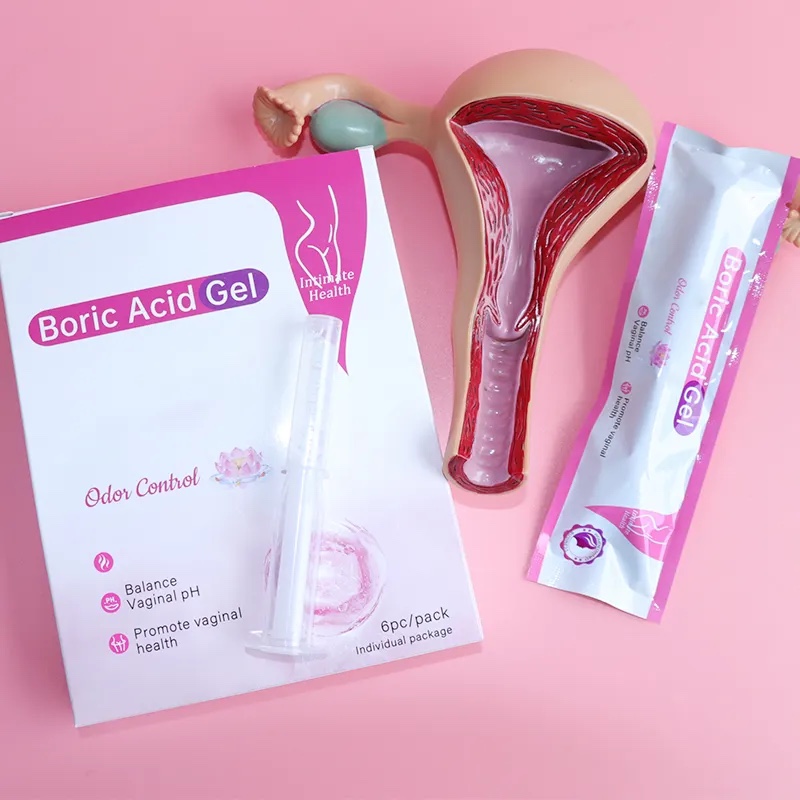
What dosage form does SELUNIVA YP-3 belong to?What is the difference between Yoni Pops and ordinary cleansing and care products?
SELUNIVA YP-3 is avaginal suppositorydosage form, and in terms of category it falls under Yoni Pops. Its method of use is insertion into the vagina (Insert as vaginal suppositories), not a wash, not a wipe, and not an oral capsule.
Basic definition and method of use of the suppository dosage form
A suppository refers to a dosage form made into small solid particles that gradually disintegrate after being placed into the body. The usage of YP-3 is vaginal insertion, relying on body temperature and secretions to gradually disperse locally. This differs from the contact method of washes, which are "rinsed and then immediately expelled," and also differs from the route of oral capsules passing through the digestive tract.
Product information shows that it uses boric acid material, is positioned functionally for vaginal cleansing and dry repair, and its application scenario is home feminine care.
Yoni Pops category boundaries: it is neither a wash nor a capsule
| Type | Form | Place of use |
| General wash solution | Liquid | Vulvar or vaginal orifice irrigation |
| Oral capsules | Solid capsules | Oral, via the digestive tract |
| Yoni Pops (YP-3) | Solid suppository pellets | Insert into the vagina |
Therefore, Yoni Pops can be understood as a solid care product for vaginal insertion, which is different from the cleansing logic of "wash it." In consumer education, the brand recommends consistently using the standardized dosage form description "vaginal suppository" rather than only the common category name. The specific frequency of use and individual suitability need to be confirmed with SELUNIVA.
What problem can the boric acid formula solve?How should the functional boundaries between vaginal cleansing and dry repair be explained to consumers?
The relationship between the expression of the boric acid formula and 100% natural herbal ingredients
SELUNIVA YP-3 is labeled with both "boric acid formula" and a "100% natural herbal" ingredient list. Placing these two statements on the same page can easily lead consumers to understand it as "having both the efficacy of boric acid and being completely natural and gentle." The brand must proactively clarify: boric acid is the material foundation in the formula, while herbal ingredients are the way the ingredient list is expressed; the two belong to different levels of information and cannot replace each other's explanation. Describing "contains boric acid" as "natural antibacterial," or describing "herbal" as "source of efficacy," will cause the subsequent descriptions of cleansing and dryness repair to lose credibility.
Safe ways to express detox and dryness repair in consumer education
Detox and dryness repair should remain at the level of care function descriptions and must not be written as treatment or cure. A safer approach is to translate them into perceptible usage descriptions:
- detox: do not say "eliminate toxins" or "purify the uterus"; instead say "help clear residual daily secretions and reduce odor concerns," and make it clear that it does not replace medical detoxification or infection treatment.
- dryness repair: Instead of saying "repair the mucosa" or "cure dryness," say "relieve dryness and discomfort caused by over-cleansing or cyclical changes," and advise that persistent dryness should be discussed with a professional.
The benefit of phrasing it this way is: consumers know they are buying daily cleansing and comfort care, and will not treat it as a medicine;the brand also retains the two communicable functional points of "cleansing + relief of dryness and discomfort."
What needs to be confirmed with the SELUNIVA team is: the boric acid concentration of YP-3, the specific herbal ingredients, and whether "dryness repair" in internal testing corresponds to subjective bodily sensation or other indicators. This information determines how specific the copy can be—if there is only a formula name and no corresponding data, it should stay at the level of user experience and not extend into claims about efficacy strength.
Which scenarios are suitable for use, and in which situations must a doctor be consulted first?Three judgment lines for the safety boundaries of vaginal suppositories
Vaginal suppositories are not a general-purpose product to "insert one whenever there is discomfort." For boric acid formula products like SELUNIVA, determining whether they can be used comes down to three key lines:Whether the symptoms are clear, whether the body is in a special stage, and whether other treatments are currently being received。
Suitable for daily care scenarios of home feminine care.
- Auxiliary care for daily cleansing and dryness discomfort, with mild, occasional symptoms and no obvious odor or abnormal discharge.
- The user confirms that they are not pregnant, menstruating, or in postoperative recovery, and are not currently being treated for any known gynecological disease.
- Can use it according to the product instructions and is willing to observe the body's reactions, rather than increasing the dosage on their own for multiple consecutive days.
The common point of these scenarios is:The purpose is care, not treating disease. If one expects to "resolve an existing medical condition," that goes beyond the boundaries of suppository self-care.
Inapplicable boundaries such as pregnancy, menstruation, post-surgery, and unexplained symptoms
In the following situations, it is not recommended to use them on your own; you should consult a doctor first:
- Pregnancy, trying to conceive, or breastfeeding: The safety of intravaginal products must be confirmed first.
- Menstruation: The vaginal environment changes, making it inconvenient to observe reactions when using it on your own.
- Post-surgery or postpartum recovery period: The vaginal mucosa is in a healing state, and medical advice should be followed.
- Unclear or persistent symptoms: Repeated itching, burning pain, abnormal bleeding, obvious odor, and changes in secretion characteristics are signals that require diagnosis.
- Currently receiving other gynecological treatment: Concurrent use may interfere with each other.
- Uncertain about boric acid or any ingredient: First confirm the complete formula with the brand.
The brand should remind consumers: if discomfort occurs, stop using it first, and record the time and sensations;If symptoms continue to worsen, are accompanied by pain, or involve bleeding, seek medical attention directly. The brand owner should not replace medical judgment or provide individualized medical advice.
What instructions for use and documents should the brand owner prepare?From SELUNIVA YP-3 to a practical checklist for consumer education content
Once a private-label product carries your brand, consumers will come to you first when they encounter problems, not the factory. Therefore, consumer education content for private-label suppositories should be prepared in layers, with different responsible parties for each layer.
Division of responsibilities for instructions for use, labels, and ingredient documents
Statutory documents delivered with the product: Labels, ingredient lists, usage steps, precautions, batch numbers, and shelf life. Must be consistent with the actual formula and packaging specifications provided by the factory; the wording must not be rewritten on one's own.
Educational content for consumers to read on their own: Detail pages, in-packaging cards, social media graphics and text. The core is to answer "how to use it, when to stop, and in what situations it should not be used." YP-3 is a boric acid formula vaginal suppository, used by insertion. The operating instructions and discontinuation signals need to be rewritten in language consumers can understand, but must not deviate from the usage boundaries provided by the factory.
After-sales response guidelines: Customer service scripts, return and exchange trigger conditions, and abnormal feedback record forms. In private-label scenarios, consumer complaints point directly to your brand, and the absence of a unified statement will amplify the risk.
Which parameters must be confirmed with the supplier, and which can be cited directly
Can be cited directly: Place of origin (Shaanxi, China), brand name SELUNIVA, model YP-3, material (boric acid), OEM/ODM customizable, stock availability. These are product identity information and do not involve usage judgments.
Must be confirmed with SELUNIVA: Single-dose dosage and recommended frequency of use, maximum number of consecutive days of use, definition of unsuitable populations (such as pregnancy, menstruation, post-surgery, etc.), interval requirements with other vaginal products, specific expression boundaries for the dry repair function, and labeling compliance requirements for boric acid vaginal products in target markets (the United States, Canada, Europe, Australia). These parameters directly determine whether consumers can use the product safely and cannot be inferred from general descriptions such as "100% natural herbs."
Suggested order of implementation: first obtain the factory's complete ingredient and usage restriction documents, then write the consumer version, and finally unify the customer service messaging. If you skip the first step and directly write the product detail page, you will most likely have to redo it later.
Frequently Asked Questions
Can the usage instructions for YP-3 be used directly from the factory's original text? The factory's original text is usually aimed at B2B clients, and its wording and readability are not suitable to be given directly to consumers. You need to retain its usage boundaries and restrictions, but rewrite the way it is expressed.
Can “100% natural herbs” be written into the product detail page as a main selling point? It can be mentioned, but it cannot be used to replace a specific ingredient description. Consumers need to know what is actually contained and how much is used, rather than a general label.
Given the different target markets, does the educational content need to be developed separately? It is necessary to confirm whether the labeling and claim requirements for boric acid-based vaginal products differ across markets. Before obtaining compliance confirmation from the SELUNIVA team, it is not recommended to use the same copy across all four markets.
How should customer service handle situations where consumers report discomfort? This depends on whether the factory has provided clear discontinuation criteria and an abnormal reporting process. If not yet available, first confirm with the SELUNIVA team before writing customer service scripts.
Learn more
If you are preparing a private-label vaginal suppository product, or need to confirm the formulation details, usage boundaries, and target market compliance requirements of YP-3, you are welcome to contact the SELUNIVA team.Provide your target market, intended usage scenarios, and packaging specifications, and we can assist in matching a solution accordingly and provide the parameter support needed for consumer education content.