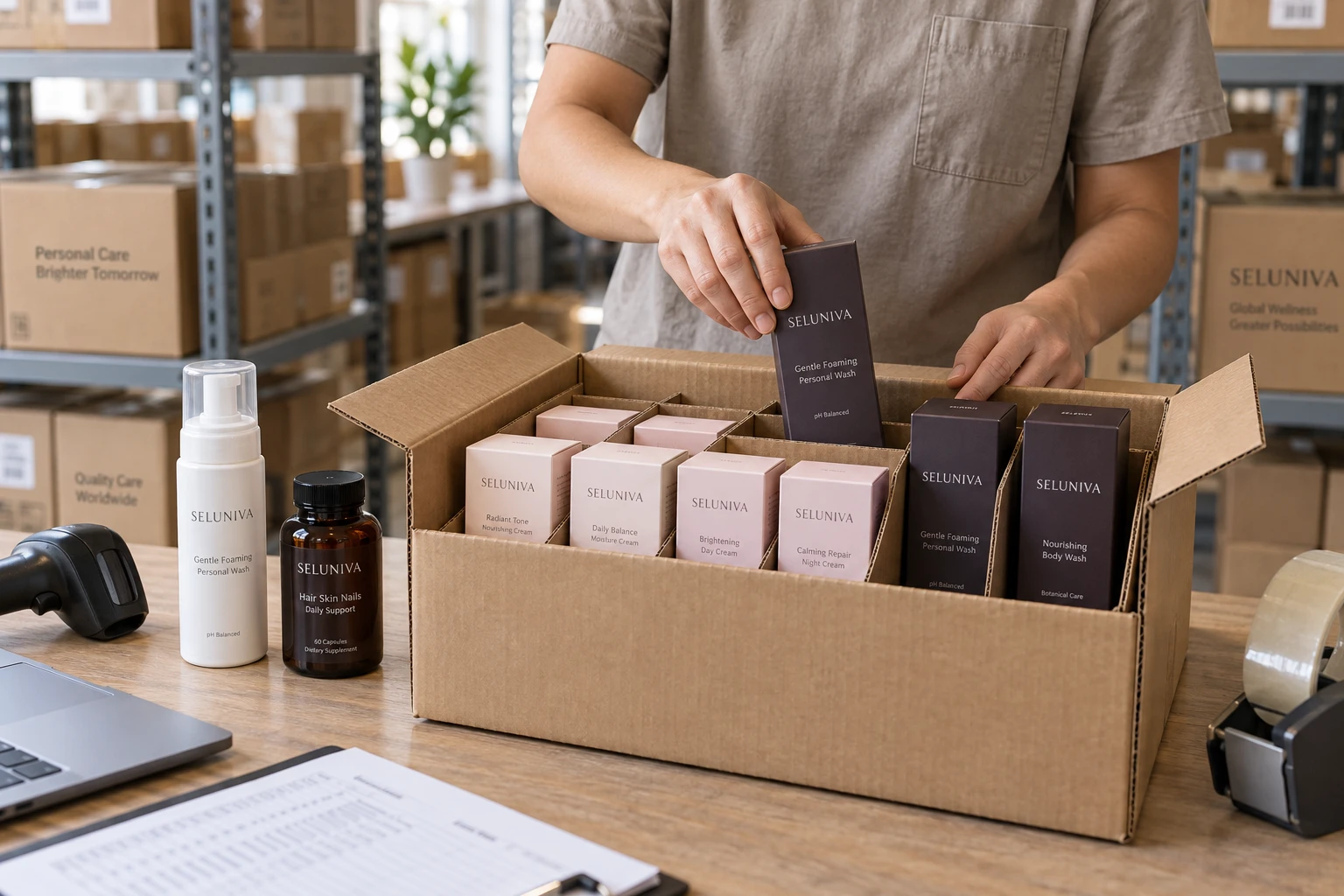
Why do small-batch trial orders for private-label intimate care always get stuck by MOQ?
The conflict between small-batch trial orders and MOQ is usually not a subjective restriction set by suppliers, but rather three fixed costs at work: production line changeover, packaging material minimum order quantity, and documentation preparation. The smaller the batch, the thinner these costs are spread, and the higher the unit cost becomes.
The essence of the MOQ conflict: it is not that suppliers are unwilling, but that production line changeover and documentation preparation have fixed costs.
Before suppository products are run on the machine, the production line must be cleared, molds changed, and filling parameters adjusted, and this time cost has little to do with batch size. Private-label orders also have to go through label artwork confirmation, formula and material verification, batch number and packaging matching, and other documentation preparation, all of which must be done no matter how many units are produced. Packaging material minimum order quantity is another threshold: packaging suppliers themselves also have minimum order requirements, and it is very difficult for brand owners to bypass them on their own.
The combination of these three costs constitutes the main source of MOQ.
Trial order starting point for SELUNIVA YP-3: which changes are small in scope and which changes are large in scope
SELUNIVA YP-3 belongs to the Yoni Pops category, uses a boric acid formula, and supports OEM/ODM. The scope of trial order changes can be assessed in layers:
| Change level | Specific content | Trial order flexibility |
| Small change | Use the existing formula and specifications, and only make private label branding, outer packaging, and copy adjustments | Relatively easy to negotiate |
| Moderate changes | Adjust the scent, color, or single-unit specifications within the existing formula framework | Requires higher volume |
| Major changes | Redesign the formula, dosage form, or efficacy direction | Close to new product development, with the narrowest room for flexibility |
To determine whether YP-3 can be trial-ordered in small batches, first clarify which layer you intend to change. Changing only the brand and packaging is clearly more feasible than changing the formula. The specific minimum order quantity, modification boundaries, and delivery time need to be confirmed after informing the SELUNIVA team of the target market, estimated first order quantity, and packaging format.
Three low-risk startup paths: white-label trial sales, standard packaging private labeling, and phased custom formula—how to choose?
For private label in the intimate care category, the risk is not that it won't sell, but that you put your budget into packaging, formula, and inventory from the very beginning. SELUNIVA's YP-3 (boric acid formula, in stock, supports OEM/ODM) offers three starting methods, with increasing complexity. Which one to choose depends on what you want to validate first.
White-label trial sales: use SELUNIVA's existing YP-3 standard version to validate the market as quickly as possible
If the customer base, pricing, and repurchase rhythm have not yet been proven, using SELUNIVA's existing YP-3 standard version for trial sales is the easiest option. In stock, with a fixed formula, no mold opening or confirmation of customization details is required. The main investment is concentrated in channel and content testing.
Suitable for: DTC sellers who have a roughly clear direction but have not yet generated their first batch of real orders;who want to first see the acceptance of boric acid formulas in the target market;who have a limited budget and are unwilling to bear packaging and formula costs before demand is validated.
Not suitable for: scenarios where there is already a clear brand tone, ingredient preferences, or where customers will directly question "why is this the same as everyone else's?" At this point, white-labeling instead slows down the pace of differentiation.
Standard packaging private labeling and phased custom formulas: under what conditions it is worth upgrading
Standard packaging private labelingSignals that it is worth doing: there is already a fixed customer base, unified visuals and brand recognition are needed, but there is no objection to the formula itself. It has an extra layer of brand feel compared to white-label, yet the formula remains unchanged, so risk and cost are controllable.
Phased formula customizationIt is only reasonable in one situation: the existing YP-3 formula truly cannot satisfy the core customer base—customers have clear preferences or concerns about certain ingredients, and this cannot be solved through packaging. Doing it in phases means changing one part first, validating it, and then moving forward, rather than fully customizing all at once.
When it is not worth adding complexity: order volume is not yet stable, and repurchase data is insufficient;the regulatory requirements of the target market for boric acid formulas have not yet been clarified;you cannot clearly explain "which specific customer problem the customization solves." If any one of these three conditions holds true, upgrading adds cost rather than competitiveness.
Next, first confirm with SELUNIVA the minimum order quantity and lead time for YP-3 in stock, as well as the minimum order thresholds corresponding to standard packaging with private labeling and phased customization respectively. Once you have these two numbers, compare them with the current order forecast, and the path will basically be clear.
Which product facts about SELUNIVA YP-3 directly affect the trial order decision?
For a trial order, what needs to be judged is not whether the product is good, but whether the existing parameters can support your push into the target market without stepping into compliance and experience pitfalls. The parameters of YP-3 can be divided into two categories.
Model, place of origin, materials and ingredients: which parameters can be directly judged, and which need to be confirmed with the supplier
Parameters that can be directly verified:
- Model and brand: YP-3 belongs to the SELUNIVA private label series, OEM/ODM is available, trial orders can go through the private label path, and there is no need to develop a formula from scratch.
- Place of origin:Shaanxi, China. It does not constitute a direct obstacle to the U.S., Canada, Europe, and Australia markets, but it will affect expectations for logistics timeliness and customs clearance paths.
- Material direction: Boric acid formula, which can be used for raw material traceability communication.
- Stock status: In stock. Standard trial orders may be more flexible in delivery time communication, but the specific delivery time still needs to be confirmed by inquiry.
Parameters to be confirmed with the supplier:
- The relationship between the statement "100% natural herbs" in the ingredient column and the boric acid formula: which specific ingredients are referred to and their respective proportions must be aligned with the supplier during the trial order stage.
- Certifications and test reports: the existing materials do not list any certification information; before the trial order, it should be confirmed whether ingredient testing, microbiological indicators, and documents required for target market access can be provided.
Functional statements and claim wording: the boundaries to be aligned at the trial order stage
The detox and dryness repair in Function, as well as Pelvis narrowing closure repair in Type, are statements that in the U.S., Canada, Europe, and Australia markets need to be confirmed in light of local claim rules. Before the trial order, the supplier should be aligned on what words can and cannot be used in packaging, detail pages, and customer service scripts respectively. If the supplier insists on keeping the original wording, you need to assess whether you are willing to bear the corresponding risk.
What should you ask when communicating with SELUNIVA about a trial order?In which situations is it not recommended to start a private label?
Most trial order failures are not due to price, but because the key conditions were not clarified during the inquiry stage. The following checklist can be copied and used directly.
Trial order inquiry checklist: MOQ, lead time, samples, document support, and payment terms
MOQ and trial order policy
- What is the private label MOQ?Are existing formula private labeling and formula adjustment priced in different tiers?
- Can the trial order quantity be lower than the regular MOQ?How is the surcharge rule calculated?
- Is the replenishment MOQ the same as that of the first order?
Lead time and production capacity
- Does the trial order production cycle start from sample confirmation or from payment?
- Does peak-season production scheduling affect lead time?Is there written lead time confirmation?
Samples and Proofing
- Sample fee, lead time, and whether it can be deducted from the bulk order payment?
- What is the basis for sample confirmation (appearance, odor, hardness, packaging)?Can the standard be locked in after confirmation?
Document Support
- Which export documents can be provided (ingredient list, COA, MSDS, etc.)?
- When the target markets are the United States, Canada, Europe, and Australia, what additional documents are required for each market?
- Can labels and packaging be customized to comply with the target market's regulatory requirements?
Payment Terms
- Payment ratio and milestones?Is payment of the balance after inspection supported?
- If finished products do not match the samples, how are rework or refunds handled?
All specific values above must be confirmed by inquiry with the SELUNIVA team; this article does not provide numerical commitments.
Three Situations Not Suitable for Starting a Private Label Trial Order and Next-Step Recommendations
- The target market and claim wording have not yet been clarified. The intimate care category has different regulatory classifications in the United States, Canada, Europe, and Australia, and the boundaries for claims also differ.If you develop a custom formula before the specifications are finalized, the samples may not be able to be listed.
- The usage scenarios and target audience are still shifting. If even the usage scenarios are not locked down, a trial order will only become an expensive sampling exercise.It is recommended to first use the SELUNIVA YP-3 standard model to validate the Home feminine care scenario.
- Cash flow cannot cover the costs of trial orders and compliance document preparation. In addition to trial order costs, there are also upfront expenses such as documents, labels, and testing.When the budget is insufficient, calculate the total investment clearly before deciding.
Next step: First use the standard model to validate the scenario and requirements, then decide whether to upgrade to a private label.
Frequently Asked Questions
For the first trial order of a private label in intimate care, what generally affects the minimum order quantity?
It is mainly affected by three fixed costs: production line clearance and mold changeover debugging, the packaging material supplier's minimum order requirement, and document preparation such as label artwork confirmation and formula verification.The smaller the changes (for example, only doing private labeling and outer packaging adjustments), the greater the trial order flexibility that can usually be negotiated;when formula or dosage form adjustments are involved, the threshold will rise accordingly.The specific values need to be confirmed with the SELUNIVA team based on the target market, first order quantity, and packaging format.
Is SELUNIVA YP-3 in stock or does it need to be customized?
YP-3 belongs to the Yoni Pops category, uses a boric acid formula, is in stock, and also supports OEM/ODM.The standard version can be directly test-marketed;Private labeling, packaging adjustments, or formula adjustments involve different levels of modification, with correspondingly different minimum order thresholds and lead times. It is recommended to specify in your inquiry which level of modification you plan to make.
If the ingredient list says "100% natural herbs" while it is also a boric acid formula, could there be compliance issues?
This depends on the claim rules of the target market, as well as which specific ingredients "100% natural herbs" refers to and their respective proportions.Before placing a trial order, you should align with the supplier on the wording of the ingredient description and confirm whether they can provide ingredient testing, microbiological specifications, and the documents required for market access in the target market.Different markets (the United States, Canada, Europe, Australia) have different regulatory classifications and claim boundaries, so it is recommended to verify them one by one according to the target market.
Can the statements detox, dryness repair, and Pelvis narrowing closure repair be used directly on packaging?
These are statements that need to be confirmed in conjunction with the target market's claim rules.During the trial order stage, you should align with the supplier on what words can and cannot be used in packaging, detail pages, and customer service scripts respectively.If the supplier insists on keeping the original wording, the brand owner needs to assess whether it is willing to bear the corresponding risk.
Under what circumstances is it not advisable to directly do private label customization?
In three situations, it is recommended to hold off: the target market and claim wording are not yet clear;the usage scenarios and target audience are still shifting;Cash flow cannot cover the costs of trial orders and compliance document preparation.If any one of these three situations applies, it is usually more prudent to first use the standard SELUNIVA YP-3 model to validate the Home feminine care scenario, and then decide whether to upgrade to a private label.
What information needs to be provided to SELUNIVA when making a trial order inquiry?
Suggested information to provide: target market, estimated first order quantity, packaging format, planned level of customization (private label only / packaging adjustment / formula adjustment), and the types of documents required for the target market.This way, the SELUNIVA team can provide the corresponding minimum order thresholds, lead times, and scope of document support.
Learn more
If you are evaluating a trial order path for a private label intimate care brand, you can first organize your target market, estimated first order quantity, and packaging format, then contact the SELUNIVA team to confirm the minimum order thresholds, lead times, and scope of document support for YP-3.Running the standard model first, then deciding whether to upgrade to a private label, is often more controllable than committing to packaging and formula costs all at once.