What Private-Label Boric Acid Suppository Suppliers Actually Provide: First Distinguish Between the Product Entity and the Contract Manufacturing Boundary
The core difference between a private-label boric acid suppository supplier and an ordinary trader lies in whether they possess the combined capabilities of formula undertaking, dosage form production, and private-label packaging. What a trader delivers is a finished product with a fixed formulation;what a private-label supplier delivers is the turnkey capability to bear your brand—whether the formula can be adjusted on demand, whether the suppository can be stably molded, and whether the packaging and labels can carry your brand information.
What category does a boric acid suppository like YP-3 belong to, and how does it differ from ordinary cleansing and care products?
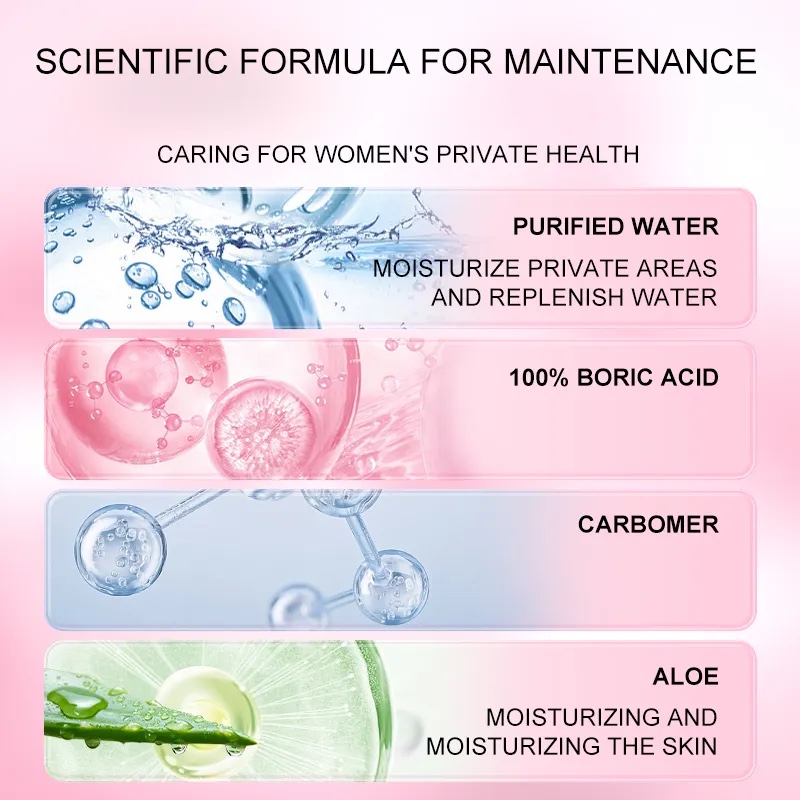
Using SELUNIVA YP-3 as a reference, this product belongs to the Yoni Pops category, uses a boric acid formula, is in suppository form, is inserted for use, and focuses on vaginal cleansing and dryness repair. Its difference from ordinary cleansing and care products lies mainly in the dosage form and route of use: the latter are mostly used externally or on the surface, while suppositories need to be inserted, which places higher demands on formula stability, molding processes, and usage instructions. If you only ask "Do you have stock and how much does it cost?" during an inquiry, it is easy to confuse contract manufacturing capability with simple supply.
OEM private labeling and ODM custom formulas: how to ask during inquiry so you don't get vague answers
To distinguish the two, the key is formula ownership and the scope of adjustment. OEM private labeling usually means the formula and dosage form are already fixed, and the main customization is branding, packaging, and labels. It is suitable for brand owners who already have a clear product positioning and want to launch quickly. ODM custom formulas mean the supplier adjusts the formula direction or dosage form details according to requirements. It is suitable for brand owners who have clear ideas about ingredients and functional positioning and are willing to invest more communication and confirmation cycles.
During inquiry, you can directly ask three questions: whether the existing formula can be adjusted;whether samples and molding results need to be reconfirmed after adjustment;what the minimum order quantity and sampling process are for private label packaging. YP-3 is labeled as supporting OEM/ODM, but the specific degree of adjustment and the verification requirements after formula changes need to be confirmed with the supplier. If the other party only replies "anything is fine" without specifying the boundaries of changes and the confirmation steps, ambiguities are likely to arise during subsequent implementation.
Among the seven capabilities, the ones most easily skipped are document support and origin traceability.
Price and minimum order quantity are usually asked about in the first email, but what really gets a project stuck at customs clearance or listing is often the two matters of label wording and batch traceability. They do not address "whether it can be sold," but rather determine "whether it can be listed on time."
When the target markets are the United States, Canada, Europe, and Australia, what should be asked about labels and ingredient documents?
Different markets have inconsistent requirements for ingredient descriptions, label language, and responsible party information. When making an inquiry, do not just ask "do you have certificates"; instead, ask clearly about three things:
- According to what standard is the ingredient list issued?: Is it a raw material list or a finished product formula statement, and can it correspond to the label format of the target market;
- Who finalizes the label: Does the supplier provide basic information, or can it cooperate with the brand owner to adjust according to target market requirements;
- How are batch documents provided: Does each batch come with documents corresponding to the batch number, or is only a generic version provided.
These three points determine the listing pace. If the supplier can only provide a general ingredient description, the brand owner must bear the time cost of translation, compliance verification, and rework themselves, and this part often affects the project cycle more than differences in unit price.
What Shaanxi as the place of origin means: how to verify raw material sources and batch traceability
Shaanxi is the place of origin marked for this product, but "place of origin" itself only indicates where it was produced or filled, and does not equal the source of raw materials. The brand owner needs to further confirm:
- Whether the procurement sources of boric acid and herbal raw materials are stable, and whether the formula description will change when batches are switched;
- Whether the batch number can be traced back to specific production records, and whether the batch can be identified when customer complaints arise;
- Whether private label orders continue to use the same raw material system, or whether materials are purchased separately according to the order.
If the source of raw materials fluctuates by batch, the ingredient description on the label will need to be repeatedly confirmed, which is a hidden risk for private label projects that need long-term stable listing.
What should the brand owner ask further when the supplier says "organic"?
The certification standards for "organic" vary greatly across markets, and it cannot be written on a label based on just one description. What needs to be asked further is: which verifiable document does this statement correspond to, which ingredients does it cover, and whether it applies to the private-label finished product. If the supplier cannot provide a document corresponding to the finished product, the brand owner must bear the compliance judgment themselves when using this statement in the target market.
These two capabilities are easily skipped because they do not immediately create a sense of comparison the way price does. But once the document scope and batch traceability are not clearly discussed, subsequent label rework, customs inquiries, and supplementary documents will directly delay listing. It is recommended to list the target market and required document types clearly at the inquiry stage, have the supplier respond item by item, and then decide whether to proceed to the next step.
Which brand owners are suitable for inquiring now, and in which situations is it not recommended to add customization complexity
If the target market, packaging direction, and claim wording are already clear, and a small-batch trial order can be accepted first to validate the pace, then you can inquire with private-label boric acid suppository suppliers now. SELUNIVA's YP-3 belongs to the Yoni Pops category, with a boric acid formula, focused on vaginal cleansing and dryness repair, and supports private label/OEM and packaging customization.
To launch the Yoni Pops private label within one quarter: first confirm which three capabilities
Prioritize verifying three items: formula undertaking capability (the relationship between boric acid sourcing and herbal claims), packaging customization scope, and the communication mechanism for trial orders and lead times. These three items directly determine whether the process from sampling to trial production can be completed within one quarter. Specific MOQ, lead times, and costs need to be confirmed with the supplier; this article does not provide numerical commitments.
DTC small-batch trial sales versus importer pharmacy channels: the trade-offs differ between the two scenarios
For DTC trial sales, prioritize minimum order quantity, sampling speed, and packaging flexibility; this is suitable for first validating conversion before scaling up. For importer pharmacy channels, prioritize ingredient documentation, label compliance, and batch consistency; customization complexity is higher, and the target market's labeling and claim requirements for boric acid products need to be confirmed in advance.
Adding customization complexity at this time is not recommended in the following situations: the target market is undecided, the claim wording has not been unified, or expectations for the product are still changing frequently. These stages first discuss private-label formula adjustments and in-depth packaging customization, which are prone to rework later due to changes in direction. In both scenarios, it is recommended to first explain the target market, channel type, and expected first order quantity, and then confirm whether YP-3's formula and packaging can match.
Self-check before inquiry: the exact questions and judgment boundaries corresponding to the seven capabilities
Before sending the first inquiry, compare the following seven capabilities one by one. For each item, the exact questions that can be copied directly are provided, and it is marked which can be judged on the spot and which must wait for the supplier's reply before being decided.
Formula undertaking and sampling Ask: "Can the existing boric acid formula be undertaken directly, or does it need to be adjusted according to our goals? How are the sampling cycle and sample fees calculated? ” Boundary: Whether they can take on the order, lead time, and costs are items for the supplier to confirm; do not infer them on your own based on “OEM/ODM available”.
Batch consistency Question: “For three consecutive batches of the same formula, what is the fluctuation range in active ingredient content and appearance? Are there retention samples and batch records? ” Boundary: The fluctuation range must be provided by the supplier and cannot be replaced by descriptions such as “100% natural herbs”.
If the answer contains only qualitative terms and no verifiable range or record-keeping method, it means consistency is still only at the verbal level.
Packaging customization Question: “What is the minimum order quantity for private label packaging? Which parts of the bottle, label, and outer box can be customized, and which can only use existing specifications? Boundary: The minimum order quantity and customizable range depend on your order scale and packaging format. These are working-condition-related items and need to be confirmed by the supplier according to your actual needs.
Communication response Question: From inquiry to providing a formula and quotation plan, how many working days does it usually take? Who will be the contact person? Boundary: Response speed can serve as an initial screening signal—if there is no substantive reply beyond the agreed time, it is usually not worth continuing to wait;but it cannot by itself prove production capacity or quality; it can only determine whether to proceed to the next round.
Delivery record Question: "What is the actual delivery time range for similar orders in the past six months? How will we be notified in case of delay? " Boundary: The actual delivery time range must be provided by the supplier; "in stock" cannot be taken as a delivery time commitment.
Compliance and Documentation Question: "What ingredient and production-related documents can you provide? Which ones are required for the target market, and who is responsible for preparing them? " Boundary: The specific document list depends on your target market and is an item that must be confirmed by the supplier; do not assume on your own that a certain certification is already in place.
After-Sales and Liability Q: When a batch quality dispute arises, how are the handling process and replenishment responsibility divided? " Boundary: This depends on the contract terms. During the inquiry stage, first confirm whether the other party is willing to put it in writing, rather than just listening to verbal promises.
Common Questions
Q: Among these seven items, which ones can be concluded on the spot? A: Communication response speed can be judged on the spot—whether replies are timely and whether specific questions are answered directly can be seen in the first round. The other six items all depend on information provided by the supplier or your specific working conditions, and cannot be based on one-sided speculation.
Q: If the supplier says "the formula can be undertaken," can we directly move to the next round? A: No. You need to follow up on the proofing cycle, sample fees, and adjustment scope.
Only when all three of these items receive clear answers can the undertaking capacity be considered truly established.
Question: How can you judge whether the answer about batch consistency is credible? Answer: See whether the other party provides a verifiable fluctuation range or a method for retaining samples and batch records. If they only give qualitative words like "stable" and "natural," the credibility is limited.
Question: Are delivery time and inventory the same thing? Answer: No. Inventory status does not equal a delivery time commitment; you need to separately ask about the actual delivery time range and the method for notifying delays.
Learn more
If you are preparing a private label for Yoni Pops, or need formula undertaking and packaging customization for private label boric acid suppositories, you can send us your target market, channel type, expected first order quantity, and packaging direction.SELUNIVA will accordingly confirm whether the formula and packaging of YP-3 can match, and provide communication suggestions for the next steps of sampling and document preparation.