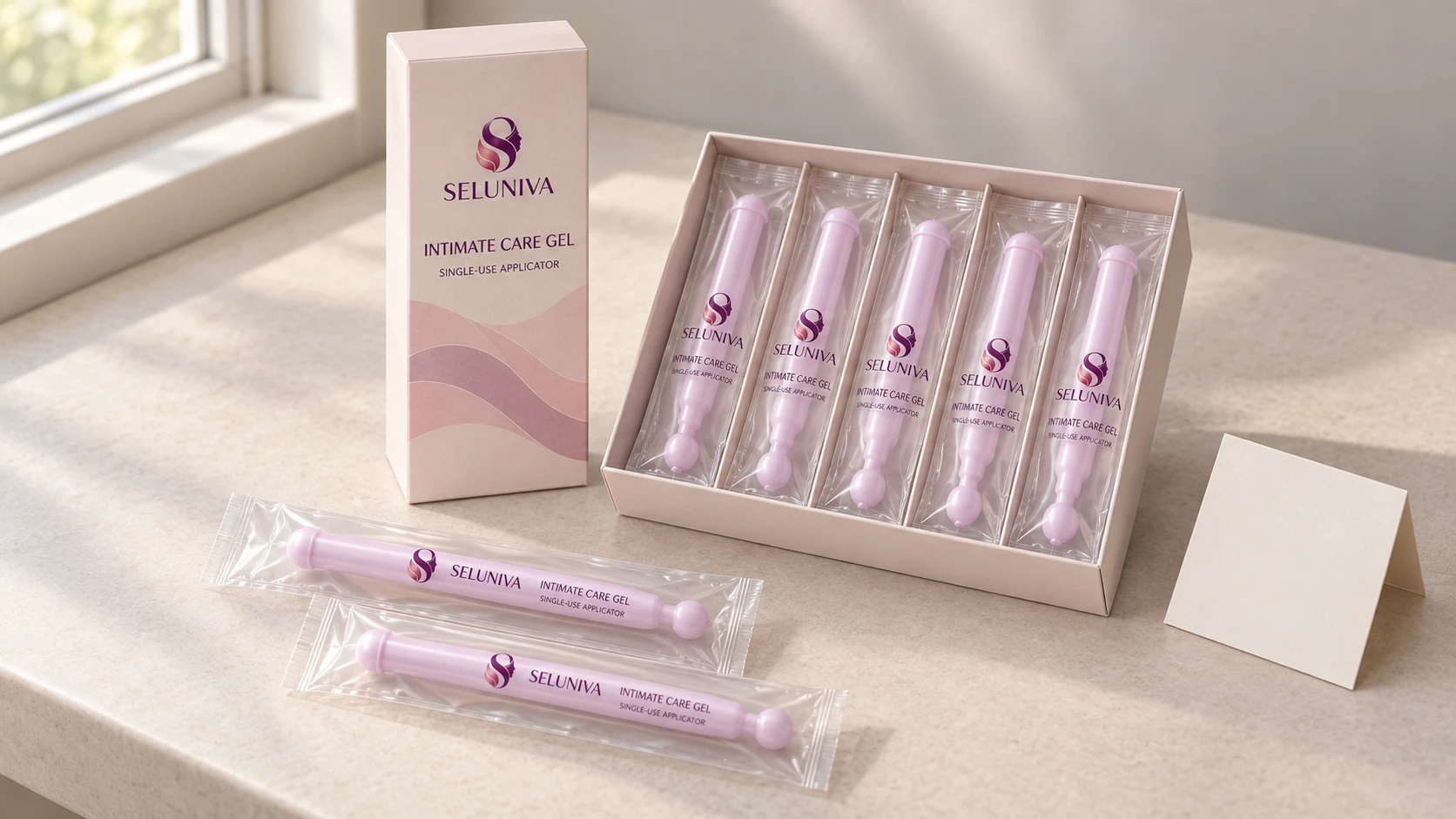
What private label vaginal tightening gel suppliers are actually supplying: first understand the product entity before discussing finding a factory.
Before looking for a supplier, the brand owner needs to first clarify: what exactly are you planning to sell under your own label? Private label vaginal tightening gel is not a vague 'intimate care product,' but a specific item with a defined form, ingredients, and delivery method. If this step is not aligned, the later price comparison, MOQ negotiation, and sample review will all lose focus.
The product definition and basic facts of this Private Label Vaginal Tightening Gel
From the product information, it belongs to the Yoni Vagina Gel category of feminine intimate care gels, delivered in gel form, made with natural herbs, plant extracts, and Chinese herbal medicine, and among its known ingredients is Sophora flavescens. The method of use is to apply as directed for tightening care, and the application scenario is home intimate care. The net content stated in the information is 1g. This specification is on the small side, and whether it is a single-use amount, a sample specification, or the final retail net content needs to be confirmed with the supplier.
There are two points worth the brand's attention:
- It is a gel, not a wash, suppository, or capsule. The dosage form determines the filling production line, packaging format, and user experience path.
- Its ingredient logic follows a herbal approach. Natural herbs and plant extracts form the base of the formula, and raw material batch stability, extract specifications, and odor and color control will become practical variables during private labeling.
Why brands should first confirm the physical product before deciding where to find suppliers
Because "vaginal tightening gel" refers to very different things in the market. Some people are looking for a herbal topical gel, some actually need a lubricant-type product, and others think they are looking for a wash or care spray. If you go inquiring about prices with a vague concept, the supplier may quote something completely different, and price comparison becomes meaningless.
First confirming the actual product can help you lock down three things:
- Formula direction—whether it is a herbal extract route or another route, and whether ingredients such as Sophora flavescens must be retained.
- Dosage form and packaging—gel viscosity, filling method, and single-unit capacity determine whether the supplier's production line matches.
- Compliance and claim boundaries—different markets have different classifications and claim restrictions for intimate care products, so local regulations need to be consulted.
Finding a supplier is not the first step; confirming the subject matter is. The brand owner can first confirm with the current website team: the composition of the standard formula, the exact meaning of the 1g specification, the packaging formats that can be supported, and the compliance requirements in the target markets (the United States, Canada, Europe, Australia). Once these conditions are clarified, then discuss OEM cooperation, and supplier screening will have a comparable baseline.
Why natural herbal intimate care gels are suitable for OEM: assessing a supplier's cooperativeness from the perspective of ingredient transparency
The value of the natural herbal route in private label scenarios lies in this: it aligns with the end-consumer narrative of "gentle care," and consumers have a lower acceptance threshold for plant extracts. But the "natural" label also means the brand owner needs to explain the ingredient sources and formula logic to end consumers. The vaguer the ingredients are written, the greater the trust and compliance risks the brand owner bears.
What natural herbs and plant extracts mean for private labels
For the private label party, an herbal formula is not the selling point itself, but a promise that needs to be verified. When consumers see "natural herbs" and "plant extracts," they assume by default that the ingredient sources are traceable and the formulation logic holds up. If the supplier can only offer vague descriptions like "a blend of multiple herbal essences," what the brand gets is an empty shell that cannot be clearly presented on packaging or detail pages.
Taking this product as an example, Sophora flavescens appears in the publicly disclosed ingredient information. This is a specific plant ingredient that can be identified and discussed—a step forward from "compound herbs," but still short of full ingredient transparency.
Why ingredient transparency is the first threshold for screening suppliers
Ingredient transparency directly determines three things: whether the brand can label compliantly, whether it can respond to consumer doubts, and whether it can define liability when customer complaints arise. A supplier willing to clearly explain its ingredient list, extraction methods, and raw material sources usually also means its production chain is more controllable;Conversely, the more it avoids ingredient details, the higher the subsequent coordination costs will be.
When contacting suppliers, you can ask them to provide:
- A complete ingredient list that distinguishes active ingredients from excipients, rather than just giving a few marketing terms;
- The source and specification description for each plant extract;
- Whether the formula contains sensitive items such as alcohol, fragrance, preservatives, etc.;
- The externally usable wording for ingredient statements, to avoid violations caused by the brand owner improvising on their own.
If the supplier cannot provide this information or it is inconsistent, it indicates that they are more suitable for commodity products rather than a private-label partnership that requires long-term co-development. It should be noted that the specific scope of ingredient disclosure, the labeling requirements for intimate care products in the target market, and whether this gel formula can match your brand positioning should all be based on the actual regulations of your market. It is recommended to confirm directly with the SELUNIVA team the ingredient materials and compliance support scope they can provide before deciding whether to proceed.
Five things that must be confirmed item by item when finding a supplier: an actionable due diligence checklist
Before contacting any intimate care gel OEM/ODM supplier, first ask clearly about the following five things one by one. They directly determine whether you can make this product and whether it can sell once produced.
OEM/ODM boundaries, ingredient documentation, label coordination, specification matching, and batch consistency
1. Where exactly are the boundaries of OEM/ODM?
Don't just ask "can it be customized"; break it down: Can the formula be adjusted, and to what extent? Can the packaging bottle type and outer box be changed to your own design? Which steps must follow the supplier's existing solutions?
If the boundaries are unclear, every subsequent change may turn into additional costs and delays.
2. Are the ingredient documents complete and do they match up?
Request MSDS and COA that match your actual procurement formula, not generic templates. MSDS is related to transportation and customs clearance, while COA is related to whether the arriving batch is consistent with the sample. Focus on checking: whether the COA batch number can correspond to the goods you received, and whether the testing items cover the heavy metals and microbiological indicators of concern in the target market.
3. Who handles label coordination
Ask clearly whether the supplier assists with checking the ingredient list, warnings, and instructions for use on the label, or whether this is entirely your responsibility. Different target markets have quite different labeling requirements. If no one is handling this item, it is easy to get stuck at customs clearance or platform listing.
4. Whether the specifications match the channel
This product has a net content of 1g, a gel dosage form, and ingredients mainly based on natural herbs and plant extracts. You need to confirm: does the 1g specification fit your pricing and repeat-purchase design? If the specification or dosage form does not match the channel, switching suppliers is less trouble than changing the formula.
5. How to be more confident about batch consistency
Ask three questions: What is the allowable range of variation in color, odor, and viscosity between different batches? How are deviations handled when they occur? Can you provide retained samples or test records for consecutive batches?
If batches are unstable, returns and negative reviews will directly eat into profits.
Which items can be concluded directly, and which must be confirmed with the supplier
What can be judged directly: whether the specifications, dosage form, and ingredient direction are consistent with your brand positioning. What must be confirmed with the supplier: the allowable range for formula modifications, whether MSDS and COA are provided with each batch, ownership of labeling responsibility, and how batch fluctuations are handled. Before these are confirmed in writing, it is not recommended to proceed to sampling or placing an order.
Which brands are suitable for this 1g private-label firming gel: recommendations, non-recommendations, and budget boundaries
This product is a 1g private-label firming gel, with natural herbs and plant extracts as its core ingredients, produced in Shaanxi, and supports OEM/ODM. It is better suited as a supplementary item within a brand's intimate care product line, rather than the entirety of a product line.
Judging suitable and unsuitable scenarios
Suitable situations:
- Your brand already has a private care or women's health product line and wants to add a firming-oriented single product to enrich the shelf or test a niche demand.
- Your channel is primarily online (independent website, e-commerce platform, social commerce), and consumers have a cognitive foundation for positioning such as "natural herbal" and "gentle care."
- You can accept a small specification like 1g as a trial pack, sample pack, or bundled pack for design, rather than treating it as a large-capacity main product.
- You already have clear private label needs: you need to apply your own brand and design your own packaging, rather than directly purchasing ready-made branded goods.
- Your target market is the United States, Canada, Europe, or Australia, and you are willing to complete local compliance confirmation yourself before launch.
Situations where adding complexity is not recommended:
- You have not yet determined exactly who this product is sold to, on which channel it is sold, or at what price band.When the target is unclear, private label will only amplify the cost of trial and error.
- You expect this gel to take on an 'efficacy-oriented' positioning, but you don't yet have any compliant claim substantiation for the target market.Herbal formulas can support a gentle care narrative, but firming-type claims fall into a sensitive zone in many markets.
- Your order volume is very small, yet you are asking for fully customized packaging, exclusive formula adjustments, and multiple rounds of sampling.In this case, the cost brought by complexity will far exceed the value of the product itself.
- You are looking at multiple categories and multiple suppliers at the same time, and have not yet locked in on the intimate care direction.Focus first, then talk about private label.
Recommendations on the trade-off between budget and complexity
Spend your budget first on actions that reduce judgment risk, rather than spending it first on packaging and visuals:
- Confirm the boundaries of ingredients and formulation: Confirm with the supplier the specific composition of the herbal extract, whether it contains Sophora flavescens (Kushen), and whether there are ingredient specification documents available.This directly affects what you can say and cannot say in the target market.
- Confirm the compliance pathway: Different markets have different classifications and claim restrictions for intimate care products.First confirm which category your target market classifies it under, then decide on packaging copy and promotional wording.If this step is not done, all subsequent investments may need to be redone.
- Confirm the minimum order quantity and sampling conditionsThe 1g specification means a small single-unit capacity, so packaging costs and filling efficiency will significantly affect the unit price.First ask clearly about the MOQ, sampling lead time, and sampling fees, then determine whether it is within your budget limits.
- Confirm the scope of private labeling: Which specific stages does OEM/ODM cover—is it only changing the label, or can the formula be adjusted, the outer box customized, and the inner packaging material customized?Different scopes lead to very different costs and lead times.
Packaging design and brand visuals can be handled after the above four points are confirmed. First ensure the product can be compliant and can be implemented, then invest in visuals.
Frequently asked questions
Can this gel directly claim a "firming" effect? It is not recommended to directly use efficacy claims. In the product information, it is positioned as gentle intimate care, with ingredients mainly based on natural herbs and plant extracts.
The specific wording that can be used depends on the regulations of your target market. You need to confirm with the supplier the ingredients and compliance documents they can provide, and then make a judgment based on local requirements.
Is the 1g specification suitable as a main product size? 1g is a small specification and is more suitable as a trial size, sample size, or bundled item. If your channel needs a large-capacity main product, you need to confirm with the supplier whether other specifications are available, or whether custom capacities are supported.
I am a small brand. Will the minimum order quantity be too high? MOQ and sampling conditions need to be confirmed directly with the SELUNIVA team. Different private label scopes correspond to different minimum order quantities. First clarify the level of customization you want, then discuss volume.
If the target market is the United States or Europe, is the logic for making the judgment the same? Not the same. The United States, Canada, Europe, and Australia each have differences in the classification and claims management of intimate care products.
It is recommended to first lock in one priority market, confirm that market's compliance requirements, and then decide whether to roll out other markets at the same time.
Learn more
If you are evaluating private label cooperation for private label vaginal tightening gel, it is recommended to first clarify the target market, channel positioning, and customization scope, and then communicate with the SELUNIVA team.We can assist in confirming formulation composition, specification matching, compliance documentation support, and OEM/ODM boundaries based on your specific needs, helping you complete key judgments before sampling.