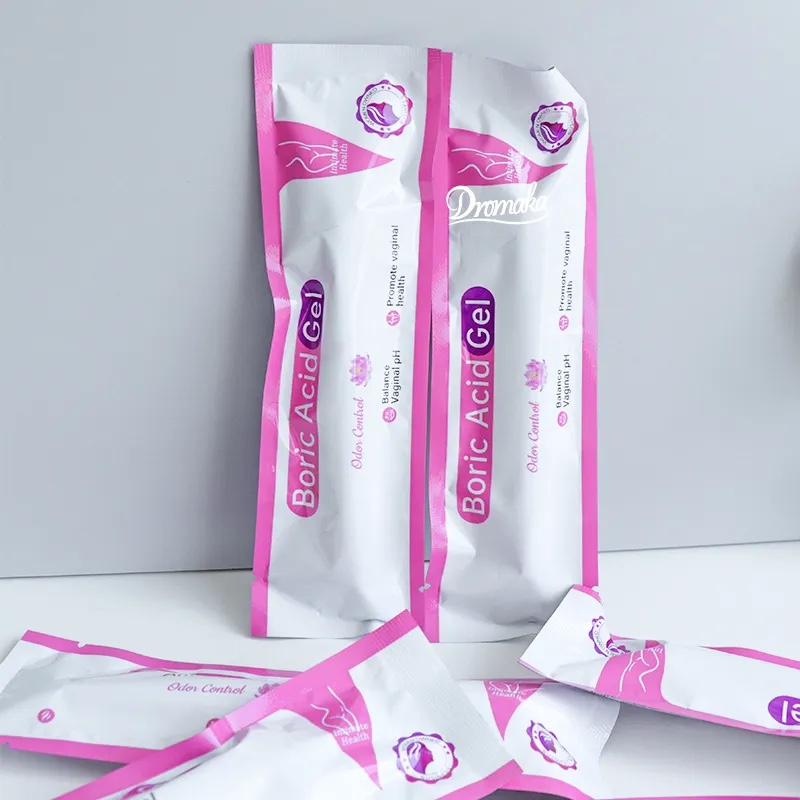
What is SELUNIVA YP-3 Boric Acid Suppository: Why the "organic" claim becomes the first compliance threshold for brand owners
SELUNIVA YP-3 is a private-label vaginal suppository belonging to the Yoni Pops category, using a boric acid formula, with the ingredient list labeled as 100% natural herbs, origin Shaanxi, inserted for use, positioned for home women's care scenarios, focusing on vaginal cleansing and dryness repair.
From the product definition perspective: the relationship between the Yoni Pops category, boric acid formula, and the expression 100% natural herbs
The core of YP-3's formula is boric acid, with the ingredient statement being 100% natural herbs. These two pieces of information describe the source of raw materials and the composition of the formula, belonging to the product definition level of description. "Natural herbs" refers to the source of ingredients, while "organic" means that this source has been verified against specific standards—the former is a product description, the latter is a compliance claim, and the two cannot substitute for each other.
The appearance of the word Organic in the product name does not mean that the claim automatically holds in the target market.
Why "organic" is not a product attribute, but a claim that needs to be verified according to market and channel
In most target markets, "organic" typically requires that ingredients, cultivation methods, processing, and even supply chain records comply with local organic standards and be audited by an accredited certification body. Products containing boric acid in particular cannot be assumed to qualify for an "organic" label by default—boric acid itself is a mineral-derived ingredient, and whether it is accepted under a given market's organic rules and at what proportion it is counted must be checked item by item against the specific market's rules. YP-3 currently has no citable certification list, which means whether "organic" can be used depends on which market it is intended for, which channel it goes through, and whether the documentation recognized by that market can be completed.
Until this is clearly confirmed, "organic" is better treated as an item pending verification rather than a selling point that can be printed directly on packaging.
"Organic" and "natural" must be judged separately: ingredient source claims and certification labels are two different compliance pathways.
When brand owners receive SELUNIVA private-label suppositories (model YP-3), they easily mistake "natural ingredients" and "organic certification" for the same thing. These are two independent pathways: one governshow ingredient sources are describeda tubeCan certification marks be affixed?。
Ingredient source descriptions: how should boric acid (mineral source) and 100% natural herbs be explained separately?
In the ingredient section of YP-3, there are two parts that need to be treated differently:
- Boric acid: belongs to mineral-derived materials.Mineral origin is not equal to "natural herbs," nor is it equal to "organic."In the ingredient list or marketing copy, it should be described separately as a mineral-derived ingredient, rather than being broadly grouped under "natural herbs" or "plant-based formula."
- 100% natural herbs: This is a statement about herbal ingredients, pointing to plant sources.It describes the source attribute of the herbal part; it cannot be used in reverse to cover boric acid, nor can the entire product be called "all-natural" just because the formula contains herbs.
If the copy is written as "all-natural formula" while the formula contains boric acid, this statement itself does not hold up. A safer approach is to explain the two types of ingredients separately, so readers clearly understand which part is herbal and which part is mineral-derived.
Certification labels: under what circumstances are organic certification marks and certificate documents involved?
"Organic" as acertification labelUse it, provided that a corresponding organic certification system exists in the target market and the supplier can provide valid certificate documents. This is not a wording issue, but a documentation issue.
The materials that need to be confirmed with the supplier include: whether the product has actually obtained any organic certification;if so, the product scope covered by the certificate, the validity period, and the issuing agency;whether the certificate covers the target market where you plan to sell (the systems of the United States, Canada, Europe, and Australia are not mutually recognized).
If the supplier cannot provide certificate documents, then no matter how "natural" the ingredients are, the organic certification mark or "organic" should not be used as a certified claim. At this point, all that can be done is an objective description at the level of ingredient sourcing.
Which one should be confirmed first?
The recommended order isfirst the certification labels, then the ingredient statements。 Certification labels are a hard threshold; without certificates, there is no room for discussion;Ingredient statements involve adjusting wording based on existing ingredients, offering greater flexibility. Confirming certification status first can prevent investing in copywriting only to discover later that "organic" cannot be labeled at all.
Specifically, when confirming with the SELUNIVA team, first ask clearly whether YP-3 has any organic certification documents and which markets they cover;After receiving a clear answer, then determine the boundaries of source claims based on the ingredient composition (boric acid + herbs).
Branch by target market and sales channel: what are the differences in the confirmation checklists for the United States, Canada, Europe, and Australia?
The same boric acid formulation suppository, labeled "organic" in four target markets, requires a different set of documents. The differences lie not only in regulatory provisions, but more in what channel parties review and what you use to prove yourself when consumers complain. This chapter does not provide legal advice, but only an actionable confirmation checklist.
Differences in focus on "organic" and "natural" claims across different markets and channels
United States: It is necessary to confirm under which category the product is declared, and whether "organic" under that category is a marketing term that can be freely used.
Canada: It is necessary to confirm whether federal-level filing is required, and whether the "organic" claim needs third-party certification support.
Europe: Certification systems vary by country, so it is necessary to confirm whether the target country has mandatory certification and whether "100% natural herbs" constitutes a claim that must be substantiated.
Australia: It is necessary to confirm whether the product is classified as a therapeutic good and what level of evidence "organic" requires under the consumer law framework.
In terms of channels: DTC platforms usually require certification certificates or ingredient traceability documents;pharmacy channel buyers usually require a more complete compliance document package;distribution channels often require a target market compliance statement. The requirements of the pharmacy channel for documentary support are usually clearer than those of DTC.
List of specific questions the brand needs to confirm with suppliers and compliance consultants
Confirm with suppliers: source and purity certification of boric acid raw materials;Which specific ingredients "100% natural herbs" refers to and their respective proportions;Whether there are any existing organic certifications or documents that can support organic claims;Whether the formula contains synthetic ingredients.
Confirm with compliance consultants: the evidentiary requirements for "organic" claims in the target market;Regulatory classification of the product in the target market;whether the existing label copy triggers claims that require substantiation;which documents are required for DTC platforms and pharmacy channels respectively.
Before receiving a clear answer, it is not advisable to design vaginal suppository labels according to the "organic" standards of any market.
Which brand owners are suitable for direct advancement, and in which situations it is not advisable to add complexity: conclusion boundaries and next steps
Who is recommended: brand owners with clear objectives and well-defined document requirements can proceed according to the framework
If you have already clarified the following three things, you can proceed directly according to the claim judgment framework in this article without adding extra process complexity:
- Clear claim objectives: You are clear about whether you need to label it as "organic" or use another expression, and you know whether this claim will appear on packaging, detail pages, or advertising materials.
- Formulation and documentation requirements match: You understand that SELUNIVA private-label boric acid suppositories (model YP-3) use a boric acid formulation, focus on vaginal cleansing and dry repair functions, can be supported by OEM/ODM, and you have confirmed which formulation or ingredient documents you need the supplier to provide to support the claim.
- Expected stability for subsequent maintenance: You expect that the claim content will not be adjusted frequently for a period after launch and are willing to execute according to the established framework.
This type of brand owner is suitable for direct advancement because the boundaries of the requirements are clear, suppliers can more quickly determine whether they can match, and the time cost of back-and-forth confirmation is reduced.
Who is not recommended: when goals are unclear, materials are insufficient, or expectations change frequently, complete the information first before discussing claims
In the following situations, it is not recommended to increase claim complexity, or even to proceed with a private-label project at this time:
- The claimed target is still wavering: You haven't yet decided whether to focus on "organic" or another selling point, or you're unsure about the target market's acceptance of such claims.
- Documentation requirements have not been sorted out: You are still unclear about which specific documents you need the supplier to provide to support the claims, and you are also unsure about the target market's requirements for the scope of documentation.
- Expected results change frequently: You expect the formula, claims, or packaging direction to be adjusted multiple times in the short term.
In these situations, increasing claim complexity will only amplify uncertainty. A more pragmatic approach is to fill in the information gaps first, then discuss specific solutions.
Next step: Confirm this information with SELUNIVA
After the information is complete, it is recommended to confirm the following with the current website team:
- MOQ and lead time: The specific minimum order quantity and production cycle for private label and OEM/ODM.
- Cost scope: The cost structure involved in private label customization.
- Document scope: What formula- or ingredient-related documents the supplier can provide, and whether these documents can support the claim requirements of your target market.
- Claim Matching: Whether there are any areas that need adjustment between your target claims and the YP-3 boric acid formula.
This information directly affects whether you can proceed according to the established framework, and is also a key basis for determining "whether it is worth adding complexity."
Frequently Asked Questions
Q: My target market is the United States, and I want to label it as "organic." Can I proceed directly? A: If you have clearly stated which materials the claims will appear on and confirmed which documents you need the supplier to provide as support, you can proceed according to the framework. The specific scope of documents needs to be confirmed with the SELUNIVA team.
Q: Does SELUNIVA's YP-3 support private label and OEM/ODM? Answer: According to the product information, OEM/ODM is available, and private label is supported. Specific MOQ, lead time, and costs need to be confirmed with the supplier through an inquiry.
Question: If my claim targets are still being adjusted, what should I do first? Answer: First determine the claim direction and use scenarios, then sort out the scope of documents that need supplier cooperation. Once the information is complete, then discuss specific solutions to avoid repeated adjustments that increase costs.
Question: What additional confirmation is needed between a boric acid formula and an "organic" claim? Answer: You need to confirm the specific requirements of your target market for "organic" claims, and whether the documents the supplier can provide match these requirements. It is recommended to directly explain your target market to the SELUNIVA team to confirm a matching solution.
Learn more
If you are evaluating a private-label boric acid suppository project, it is recommended to first clarify your target market, claim type, and channel documentation requirements before submitting your specific needs to the SELUNIVA team.Based on your target market and claim direction, we can help confirm the matching plan for the YP-3 formula and documentation, reducing ineffective inquiries and repeated communication.