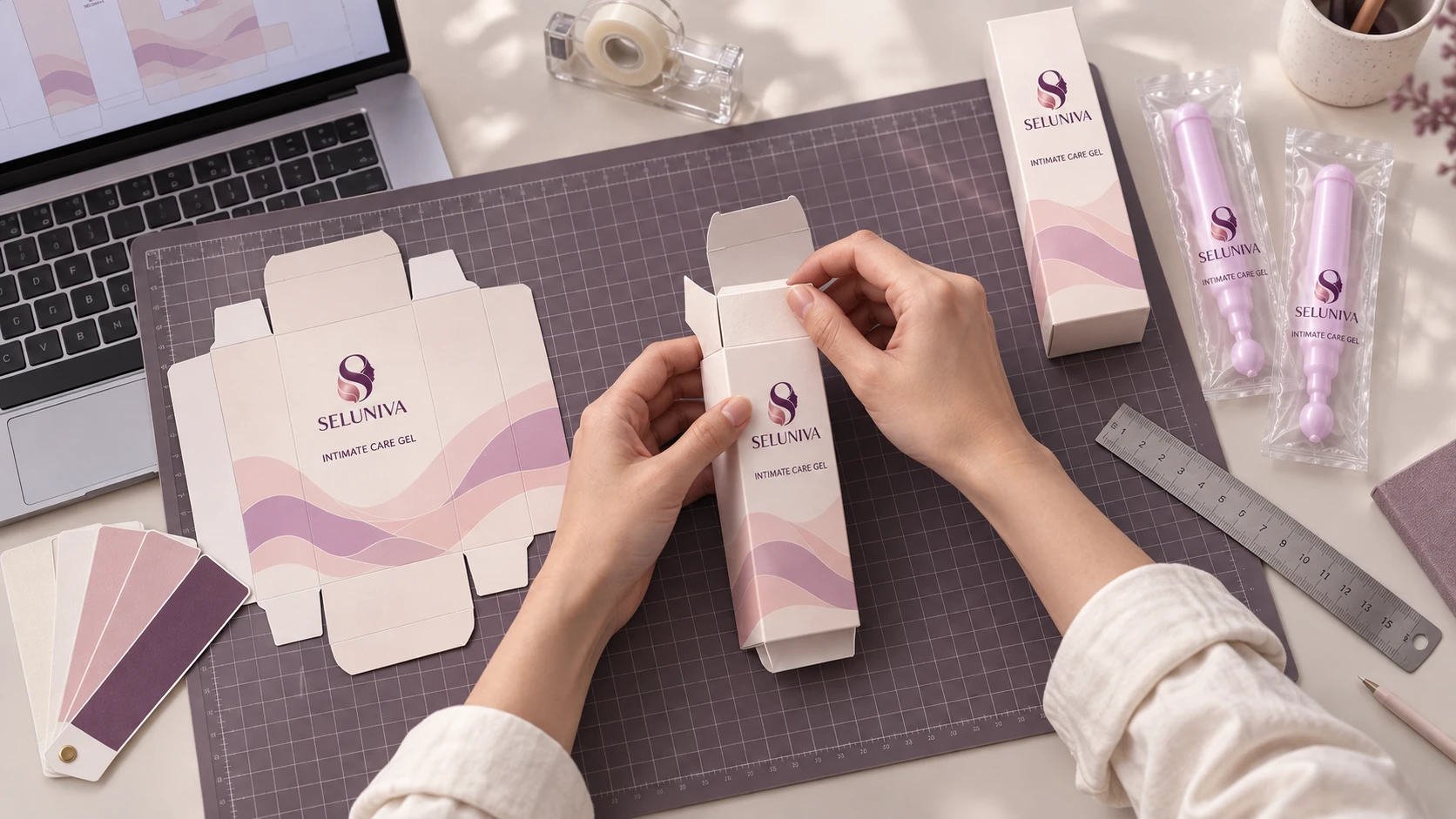
What exactly does the OEM/ODM private label process include?First, distinguish inquiry, requirement confirmation, sampling, confirmation, and mass production.
OEM/ODM private label usually has five steps:Inquiry → Requirement Confirmation → Sampling → Confirmation → Mass Production. Taking Private Label Vaginal Tightening Gel for Feminine Yoni Vagina Gel as an example, skipping any step may lead to rework later.
What to prepare at the inquiry stage: translate “wanting a private label tightening gel” into executable requirements.
Writing only “I want to make a private label gel” cannot move things forward. During an OEM inquiry, at minimum the other party must be able to judge whether the product can be made and in what direction to make it:
- Product direction: Is it exactly this intimate care gel based on natural herbs and plant extracts, or does the formula need to be adjusted.
- Target market: The United States, Canada, Europe, and Australia have different labeling and ingredient disclosure requirements, which will affect whether the existing materials can still be used.
- Brand and packaging intent: Whether to use your own brand and whether custom packaging is needed determines whether to go with OEM or ODM.
- Order quantity range and time expectations: Precision is not required, but a rough range is needed; otherwise, it is impossible to judge whether it is worth proceeding to sampling.
The output of this stage is a requirements description that both parties can understand.
What to lock down in the requirements confirmation stage: customization scope, specifications, and target market information
This is the step most easily underestimated, yet it has the greatest impact on subsequent costs. What needs to be locked down are the confirmable items:
- Customization boundaries: whether it is only changing the brand and packaging (OEM), or whether it involves formula, fragrance, and texture adjustments (ODM).If the boundaries are unclear, the sampling direction will keep going back and forth.
- Specification confirmation: Net content, dosage form, ingredient statements, etc.In the existing materials, the Type is Yoni Vagina Gel, the net content is 1g, and the Material is Natural Herbs, Botanical Extracts, Chinese Herbs. Whether these will be retained or adjusted must be finalized at this stage.
- Target market materials: Claim wording, label language, and necessary ingredient and safety documentation.If the materials are incomplete, they should be completed first before proceeding to sampling.
- Confirmation mechanism: Who confirms the samples, by what standards confirmation is made, and whether further changes are allowed after confirmation.Without a confirmation mechanism, disputes are likely to arise during the mass production stage.
The output of this stage is an executable customization checklist and confirmation criteria, which directly determines whether the sampling is done right the first time.
If the target market, customization boundaries, or confirmation criteria are still changing frequently, do not rush into sampling—that is not saving time, but pushing rework costs to later.
What information must be locked down before sampling?Customization scope, specifications, and target market materials are all indispensable.
Sampling is not "make it first and see," but turning verbal requirements into reproducible production standards. If the following three types of information are not locked down, mass production may still require rework even after the sample is approved.
How to confirm the customization scope: what can and cannot be changed in formula, packaging, and specifications.
First distinguish what can be changed and what cannot. Taking this private-label vaginal tightening gel as an example, the formula side involves natural herbs and plant extracts (such as Sophora flavescens extract), and whether to retain the positioning of detoxification and womb warming;The packaging side involves the tube or bottle type, capacity, private-label label, and brand name (SELUNIVA or the customer's own brand);The specification side involves the net content, dosage form viscosity, and method of use.
Specific questions that need to be confirmed with the team:
- Should the formula continue to use the existing herbal combination, or is it allowed to adjust the ingredient proportions?After adjustment, is it still necessary to redo the stability observation?
- Who designs and who reviews the private-label label?Which party is responsible for verifying the label content requirements of the target market?
- The existing net content is 1g.This specification has a direct impact on sampling: with a small single-unit dosage, filling precision, sealing performance, and per-unit cost will all be magnified, and samples must verify whether the actual extrusion volume matches the labeled amount.If the target market is accustomed to a larger capacity, this needs to be raised before sampling, rather than waiting until the samples are produced and then making changes.
What to ask clearly about the sampling policy: sample specifications, costs, and confirmation standards
There is no uniform answer for sampling costs and lead times; it depends on whether the formula is ready-made, whether the packaging requires mold opening, and whether the label is customized. When making an inquiry, you should ask the other party to provide written confirmation rather than a verbal quotation.
Focus on confirming four items:
- Sample specifications: Are the samples made with the same formula, the same filling equipment, and the same packaging materials as mass production?If the samples are handmade small samples, there is still a risk of deviation in the bulk goods after approval.
- Cost composition: Are the sample fee, mold fee, and label proofing fee calculated separately, and can they be deducted after mass production?
- Confirmation standards: What counts as qualified—appearance, consistency, odor, extrusion amount, sealing performance?It is recommended to write these into checkable items to avoid releasing goods just because they "feel about right."
- Timeline milestones: How long does it take from formula confirmation to sending out samples, and how much longer for each revision?
Target market materials must also be prepared before sampling: when selling to the United States, Canada, Europe, and Australia, ingredient descriptions, label language, and claim boundaries may differ. If these materials are missing, even if the sample is made, it may not be directly usable. It is recommended to provide the target country, sales channel, label draft, and claim wording to the team all at once before sampling, so they can confirm a matching plan.
What other confirmation points are there from sampling to mass production?How to ask about delivery pace and batch consistency
A sample passing does not mean you can place an order. From sample confirmation to bulk shipment, there are still several confirmation points that are easy to overlook, and they directly determine whether the goods you receive are the same as the sample.
What to confirm during the confirmation stage: sample evaluation and modification boundaries
After receiving the sample, first clarify two things:Is this sample the final formula and final packaging, andwhat can still be changed after confirmation。
- If the sample is a "close version" rather than the final version, ask clearly whether there will be another confirmation sample before formal mass production, to avoid scheduling production directly based on the close version.
- Changing the formula, fragrance, color, or packaging materials after confirmation usually means re-sampling and restarting the timeline, and the delivery date will be pushed back.So make all possible changes before confirmation. If changes are made after confirmation, ask clearly whether there will be a charge and whether production will be rescheduled.
- It is best to put the confirmation into writing: state clearly which sample version is the standard and what specifications it corresponds to, so that subsequent acceptance inspections have a basis.
What to ask clearly before mass production: delivery schedule, batch consistency, and document support
Delivery scheduleDo not just ask "how long until shipment"; break it down into: how many days after confirmation production starts, how long the production cycle is, whether bulk samples will be sent first, what logistics method will be used, and how many days in total from order placement to arrival at the warehouse. Different quantities and whether packaging materials are customized will all change the lead time, so you need to ask based on your actual order quantity.
Batch consistencyThis is what most needs to be asked in advance for personal care gels: how much variation in color, odor, texture, and fill volume is allowed between different batches? Do they have batch retention samples and factory inspection records? If we need to restock later, can the formula and packaging materials remain consistent?
If these questions aren't clarified, the second batch won't match the first batch, and after-sales will be very passive.
Documentation supportConfirm according to your target market: which accompanying or filing documents are needed, whether they can be provided, and who is responsible. The requirements in the United States and Europe are different. For the specific list, directly tell the team your sales market so they can confirm accordingly.
List these items as a confirmation checklist and ask them all at once during sample confirmation. This saves more time than asking again before mass production.
Who is this private-label firming gel suitable for, and who is it not suitable for?Use the process to confirm the results and make the final judgment.
Whether private label cooperation can proceed smoothly often does not depend on how good the product itself is, but on whether you have already thought clearly about "what I want" before making the inquiry. Below, confirm the results according to the process and draw the boundary between what is suitable and what is not.
Who is recommended: brand owners with clear goals, complete materials, and acceptance of the 1g specification.
If you meet the following conditions, this private label firming gel is worth entering the sampling process:
- Clear target market: mainly targeting the United States, Canada, Europe, or Australia, and with a basic understanding of the packaging and claim standards for local intimate care products.
- Clear end user: aimed at women with at-home intimate care needs, with the product positioned as gentle herbal care rather than a medical or therapeutic product.
- Existing basic information: brand name, target packaging style, estimated first order quantity, whether custom scent or formula fine-tuning is needed—these can be provided all at once during the inquiry.
- Acceptance of the 1g specification positioning: a 1g net content is more suitable for designing a retail strategy as a trial size, sample size, or single-use care pack.If you plan to do regular retail full-size products, you need to first confirm with your team whether this specification meets your channel expectations.
- Ability to accept the uncertainty of herbal formulas: the product is based on natural herbs and plant extracts, including ingredients such as Sophora flavescens.There are natural differences between batches of herbal raw materials, and you need to accept this rather than requiring every batch to be completely consistent in color and scent.
Who it's not recommended for: scenarios with vague goals, insufficient materials, or expectations that change frequently
In the following situations, it's advisable to pause private labeling first rather than rushing into inquiries:
- You haven't figured out who you're selling to: If the target audience, usage scenarios, and price range are still fluctuating, sampling will turn into repeated trial and error, and every adjustment consumes time and budget.
- Incomplete materials provided: Without brand visual direction, packaging preferences, or estimated order quantity, the team cannot determine the minimum order threshold and formula compatibility, and the process will get stuck at the confirmation stage.
- Expected results change frequently: Today you want a firming effect, tomorrow you want to add whitening, and the day after tomorrow you want to change the fragrance.The core of private labeling is to lock in the requirements and then push forward in one go; frequent changes will multiply the sampling cost.
- Plan the 1g specification as a full-size product: The 1g capacity naturally leans toward trial, travel, or experiential scenarios.If your channel needs a large-capacity full-size product, this specification may not be the optimal starting point, and you need to first confirm with the team whether there are other capacity options.
- Expecting medical-grade efficacy claims: The product is positioned as gentle intimate care, not a drug.If your market strategy relies on therapeutic or more robust efficacy statements, this product's basic positioning does not match.
The trade-off between budget and complexity
The extra cost of private label compared to taking stock items is mainly spent on formula confirmation, packaging customization, and sampling rounds. If you only need a herbal intimate gel that can be quickly put on the market, and you can accept the existing formula and 1g specification, the complexity is the lowest. If you need an independent formula, exclusive packaging, and a multi-specification combination, the complexity will rise significantly—at this point you need to ask yourself: can these additional investments really solve your main sales problem?
If the answer is no, it is more cost-effective to first use a simple solution to validate the market.
Frequently Asked Questions
Is the 1g specification suitable for retail or for trial packs? In terms of net content, 1g is closer to the positioning of a trial pack, sample pack, or single-use care pack. If you plan to make a regular retail full-size product, it is recommended to first confirm with the team whether other capacities are available, and whether the shelf logic of the 1g specification holds in your target channel.
Will herbal formulas cause each batch of product to be different? Natural herbs and plant extracts inherently have batch-to-batch variation; this is a characteristic of the raw materials. If you have extremely high requirements for consistency in color and odor, you need to clarify the acceptable range of variation with the team during the sampling stage.
I have never done private labeling. What should I prepare first? First, write three things clearly: target market, target audience, and estimated first order quantity. Then organize the brand's visual direction and packaging preferences.
The more complete this information is, the fewer sampling rounds there will be, and the more controllable the overall cost will be.
What if I want to change the formula after sampling? Changing the formula means redoing the sample, which increases both time and cost. It is recommended to confirm the efficacy direction, fragrance preference, and texture preference before the first sample to avoid using sampling as a trial-and-error tool.
Can this product help me make efficacy claims? The product is positioned as gentle intimate care, not a medical product. The specific claim approach needs to be determined based on your target market regulations. It is recommended to confirm directly with the team during the inquiry which statements can be used and which need to be avoided.
Learn more
If you are evaluating cooperation directions for private-label vaginal tightening gel, you can organize your target market, target audience, estimated first order quantity, and packaging preferences into a brief requirements document and submit it to the team.During the requirements confirmation stage, we will help you verify the customization boundaries, the channel suitability of the 1g specification, and the target market documentation checklist, and then determine whether to proceed to sampling—this saves more time than directly asking "can you make it."