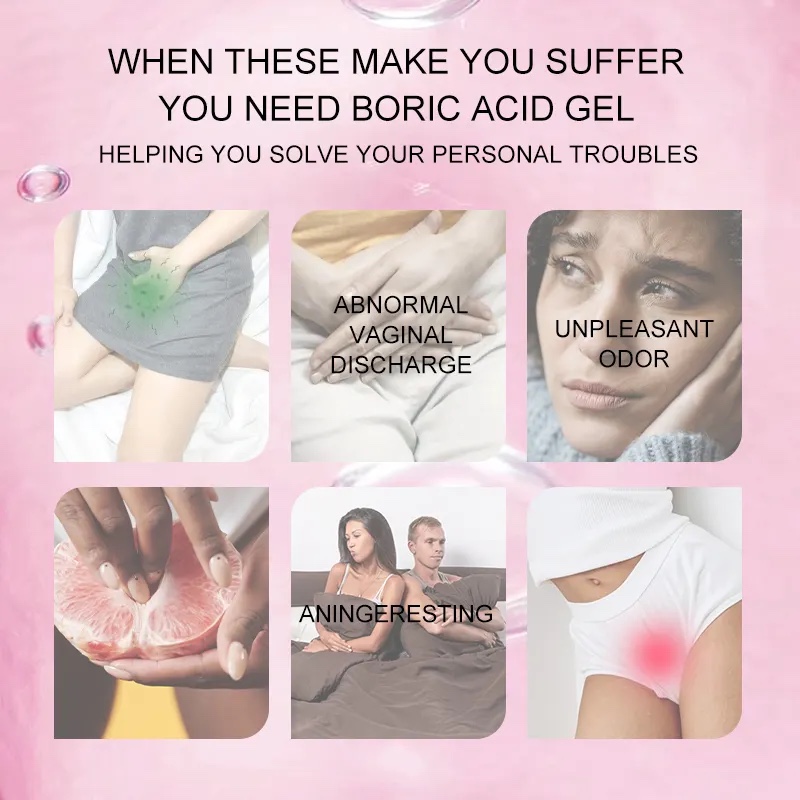
What is SELUNIVA YP-3: Why its claims cannot be copied from ordinary intimate care products
The full product name of SELUNIVA YP-3 is "Private Label Organic Vaginal Tightening Suppositories", model YP-3, belonging to the Yoni Pops category, with a dosage form of vaginal suppositories, usage indicated as Insert as vaginal suppositories, and application scenario of Home feminine care. The formula uses boric acid as the core ingredient, origin Shaanxi, brand SELUNIVA, supporting OEM/ODM private label customization.
The Yoni Pops category and the dosage form boundaries of boric acid suppositories
Yoni Pops corresponds to suppository-type intimate care products, rather than external washes, wipes, or ordinary cleansing care products. YP-3 uses a boric acid formula, with the usage method of insertion into the vagina; the dosage form and site of use determine that its claim discussion cannot directly apply the wording framework of ordinary intimate care products. The product materials do not provide certifications, standard numbers, or clinical conclusions, so any functional statements need to be confirmed based on the materials themselves and the rules of the target market.
What is written and what is not written in the product materials
The labeled functions are vaginal cleansing and dryness repair (detox, dryness repair). The product name includes "Tightening," and the Type field in the specification table is written as "Pelvis narrowing closure repair," but the materials do not list tightening as an independent function item, nor do they provide a basis for a medical treatment function. In addition, how "100% natural herbs" and the boric acid formula coexist is likewise not explained in the materials. These gaps mean that external claims cannot directly copy the title; instead, it should first be confirmed which function has actual material support.
To what extent can the three types of claims—detox, dryness repair, and tightening—each be written?
These three types of terms appear very frequently in the intimate care category, but the extent to which they can be written is not the same. There is only one criterion for judgment: every functional term on the detail page must be traceable to corresponding support in the product materials or in the compliance documents of the target market.
Detox and dryness repair: which statements in the product materials can they correspond to?
The product materials for SELUNIVA YP-3 have already labeled "Vaginal detox, dryness repair" as Function, and the core selling points also state "Boric acid formula with vaginal detox and dryness repair functions." Therefore, these two terms can appear as product function descriptions, placed in the same context as the boric acid formula and suppository usage.
However, the materials support a correspondence at the functional level and do not support extending to specific mechanisms or effect promises such as "eliminating toxins" or "curing dryness." The detail page can state "the formula corresponds to vaginal cleansing and dryness repair functions," but should not state "improvement of dryness within a few days after use." The final wording must be confirmed in accordance with the document requirements of the target market (the United States, Canada, Europe, Australia).
tightening: It is in the product name, but can it be written directly on the detail page?
The product name contains "Organic Vaginal Tightening," and the Type field states "Pelvis narrowing closure repair." The presence of tightening in the name does not mean the detail page can directly expand on it as an independent efficacy claim.
The product name is a product identifier, while the detail page function description is an efficacy claim, and the two face different levels of compliance review. The name can be retained, but if the detail page wants to write tightening as "firming effect," "restore firmness," or "improve laxity," supporting documents corresponding to the target market are required;The product materials do not provide any tightening-related mechanism or testing evidence. When there are no documents, it is safer to replace stronger claims with gentle wording such as "firming care," or to limit the wording to the Type description and suppository usage scope.
All three types of claims must be noted: whether they can actually be used must be confirmed in light of the target market and channel, and one set of copy cannot be used globally.
Which scenarios are suitable for using this set of claim wording, and which scenarios are not recommended
To judge whether this set of claim wording can be used, the core issue is not the copy itself, but ratherwhether your market, channel, and consumer communication scenario allow expressions such as "detox," "dryness repair," and "tightening" to be directed at end users。 The formula and functional positioning of SELUNIVA YP-3 are a boric acid formula, vaginal cleansing, and dryness repair; it belongs to the Yoni Pops category, and its application scenario is labeled as Home feminine care. This wording is usually easier to implement in private domains or professional communication, but in public retail channels, the phrasing needs to be recalibrated according to local regulations.
Suitable for: daily care scenarios such as home feminine care
When the communication scenario ishome daily care, private community groups, one-on-one consultations, or non-public product descriptions, this set of claim wording has a high degree of fit:
- Consumers are already actively looking for care products related to "cleansing," "dryness and discomfort," and "tightness," and the communication context itself is care rather than treatment;
- The content focuses on usage methods, ingredient sources, and daily care habits, with functional statements serving as supplementary explanations rather than as efficacy promises;
- The communication targets are existing customers with an established foundation of trust or consultation-oriented buyers, who can accept descriptions at the level of "care experience" rather than requiring medical-grade evidence.
In such scenarios, detox and dryness repair are more appropriately written ascare directions, rather than conclusive statements such as "cure" or "repair damage."
Not recommended: scenarios where the target market is unconfirmed or the channel requires medical-grade evidence
The following situations are not recommended for directly applying this set of claim wording:
- The target market has not yet been confirmed: The United States, Canada, Europe, and Australia have inconsistent regulatory approaches to claims for intimate care products. Before confirming the specific market, any wording such as "detox" or "repair" may need adjustment;
- The channel requires medical-grade evidence: If the platform, chain pharmacy, or local distributor requires clinical, certification, or medical-grade supporting materials, and there is currently no corresponding evidence, then this wording is not suitable for direct submission;
- For public e-commerce detail pages: On public pages, "tightening" and "detox" can easily be judged as efficacy or treatment implications, which carries higher risk than private-domain communication;
- Consumer expectations lean toward medical: If the target users understand the product as "solving gynecological problems" rather than daily care, this wording will create a mismatch in expectations.
What to confirm next
Before deciding which wording to use, first confirm three things with the SELUNIVA team:The specific market you plan to enter, the corresponding channel type in that market, and whether that channel requires additional evidence materials. Only after these three items are determined can it be judged whether the existing claim wording is directly usable, needs to be rewritten, or requires supplementary supporting materials.
How to look at parameters, place of origin, and documents: what can be directly determined, and what must be confirmed with SELUNIVA
Before making an inquiry to SELUNIVA, it is recommended to divide the materials into two categories: parameters that are already clear for the product itself can be directly written into the internal product selection table;documents that depend on the regulations of the target market need to have their scope of support confirmed item by item.
Parameters that can be directly verified: brand, model, place of origin, material, ingredients
The following information comes from the product materials and is suitable for writing into a preliminary product selection table or internal communication document:
| Item | Content |
| Brand | SELUNIVA |
| Model | YP-3 |
| Place of Origin | Shaanxi, China |
| Material | Boric Acid |
| Ingredient Description | 100% Natural Herbal |
| Functional Direction | Vaginal Cleansing, Dryness Repair |
| Cooperation Methods | Supports OEM/ODM, items in stock |
These parameters can be used to determine whether the product falls within your category planning, but they do not mean it can be directly used for consumer claims. Whether a functional statement can be used depends on the target market's regulatory wording, not on the product materials themselves.
Documents to be confirmed: target market labels, ingredient declarations, test report scope
The following cannot be directly determined from the existing parameters and need to be confirmed with SELUNIVA for the specific target market:
- Target market labels: The United States, Canada, Europe, and Australia have different labeling requirements for intimate care products. Which format of label support SELUNIVA can provide, and whether you need to complete the local compliance review yourself, need to be confirmed.
- Ingredient declarations: The specific ingredient list of 100% natural herbs, whether active ingredients other than boric acid are included, and whether an ingredient declaration can be issued directly affect the claim space at the ingredient level.
- Test report scope: The existing materials do not list specific test items.It is necessary to confirm the types of reports that can be provided, whether they cover the mandatory inspection items of the target market, and whether the issuing party is recognized.
- Boundaries of support for functional claims: Among the three directions of detox, dryness repair, and tightening, which ones have documentary support and which are merely product descriptions need to be clarified item by item.
Frequently Asked Questions
Can the parameters of YP-3 be used directly on the consumer page?
Factual parameters such as brand, model, place of origin, and materials can be used, but functional statements must first be checked to confirm whether they are allowed in the target market and whether there is documentary support.
Whom should I confirm with regarding the labels and ingredient documents required by the target market?
Confirm with SELUNIVA the documents that can be provided and the scope of support, while also checking the regulatory requirements of the target market yourself; only after aligning both sides can gaps be identified.
Can the description "100% natural herbal" be quoted directly?
It can be quoted as product information description;If used for consumer claims, it is necessary to first obtain the specific ingredient list and corresponding declaration documents, and confirm the target market's acceptance standards for "natural" statements.
Are the test reports ready-made or do they need to be arranged additionally?
The existing materials do not list specific test items. It is necessary to confirm with SELUNIVA the types of reports that can be provided, the scope of coverage, and whether they meet the mandatory testing requirements of the target market.
Learn more
If you are planning private label products such as Yoni Pops or boric acid suppositories, you can first organize the target market, channel type, and existing claim copy, and send them to the SELUNIVA team.Based on this, we can help you check item by item which wording is supported by documentation and which requires additional files, and assist in matching OEM/ODM private label solutions.